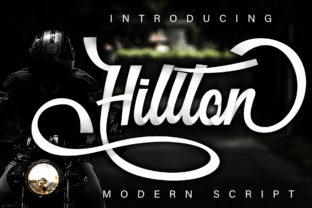
Hillton Modern Script: Elevating Your Designs with Elegant Flow
The Visual Personality of Hillton
When you first encounter Hillton Modern Script, the immediate impression is one of fluid sophistication. It strikes a delicate balance that many script fonts struggle to achieve: it feels personal and handwritten, yet it retains a level of polish that prevents it from looking messy or too casual. The letterforms in Hillton feature a contemporary approach to traditional calligraphy. You won’t find the stiff, rigid strokes of vintage penmanship here; instead, you get a relaxed, flowing rhythm that mimics natural handwriting.
What makes this typeface stand out in a crowded market of premium fonts is its construction. The strokes have a medium weight, offering enough presence to stand out on a page without overwhelming the viewer. The connections between letters are crafted to ensure a smooth, continuous flow, which is essential for maintaining legibility in a script font. Hillton manages to be expressive without being illegible—a common pitfall with handwritten fonts. It has a warmth to it, a human touch that digital type often lacks, making it an excellent choice for projects that need to connect with an audience on an emotional level.
Where Hillton Truly Shines: Applications and Use Cases
Understanding the versatility of Hillton is key to using it effectively. Because it is a display font, it is not designed for long paragraphs of body text. However, for headlines, logos, and accent text, it is incredibly powerful. In the realm of brand identity, Hillton offers a distinct voice. It is particularly well-suited for industries that value elegance, lifestyle, and creativity.
For logo design, Hillton provides a ready-made aesthetic that suggests a brand is approachable yet professional. Think about boutique shops, wedding planners, or lifestyle influencers. This font sets the tone immediately. In packaging design, it can elevate a product from a generic shelf item to a premium good. Imagine a coffee bag, a candle label, or a cosmetic box featuring Hillton; the typography instantly communicates quality and care.
Beyond physical products, Hillton is a strong contender for digital assets. It works beautifully for social media graphics, particularly on platforms like Instagram or Pinterest where visual appeal drives engagement. It is also effective in editorial design, serving as a striking header for magazine covers or blog post titles. If you are working on web design, using Hillton for hero section text can grab attention immediately, provided it is used sparingly and sized correctly.
Strategic Design: Pairing and Hierarchy
One of the most common questions regarding modern typography is how to pair fonts. A script font like Hillton rarely works well in isolation; it needs a partner to create a complete visual hierarchy. The goal is contrast. Because Hillton is decorative, fluid, and textured, it pairs best with something clean, structured, and neutral.
A classic font pairing strategy is to combine Hillton with a geometric sans serif font. The simplicity of the sans serif allows the details of Hillton to pop, while the sans serif handles the heavy lifting for readability in smaller sizes. Alternatively, pairing Hillton with a classic serif font can create a look that is timeless and sophisticated, perfect for high-end editorial layouts or formal invitations.
When integrating Hillton into your layout, pay attention to spacing. Script fonts often require careful kerning, especially when placed next to rigid sans serif letters. Ensure there is enough breathing room so the letters don’t crash into one another. This attention to detail is what separates amateur work from professional design assets. Remember, the goal is to guide the reader’s eye, not confuse it.
Practical Considerations for Professionals
If you are considering adding Hillton to your toolkit, there are a few practical aspects to review. First, check the character set. A high-quality creative font usually includes alternates, ligatures, and swashes. These extra glyphs allow you to customize the look of specific letters, ensuring that your text doesn't look repetitive. For example, having multiple versions of the lowercase "s" or "t" allows you to create a more authentic handwritten feel.
Second, consider the licensing. If you are a small business owner or a freelancer, you need to ensure the commercial font license covers your specific usage, whether it is for a client's logo, a product for sale, or a website. Most reputable font foundries are clear about this, but it is always worth double-checking before finalizing a project.
Finally, test the font in context. Don't just look at it on a design software canvas; mock it up. See how it looks on a mobile screen, on textured paper, or on a physical product label. Hillton is versatile, but like all typography, it performs differently depending on the medium. By taking the time to test and refine, you ensure that this elegant script serves your project perfectly, adding that touch of class and style you are looking for.